
Key takeaways
- Viserys's account is a belief transmitted to Rhaenyra.
- The political effect of secrecy is an interpretation, not confirmed intent.
- Duty can plausibly support restraint as well as entitlement.
Theory, not confirmed canon. Evidence and counterarguments are limited to the episode boundary above; no future book outcomes are used as predictions.
Evidence available at this boundary
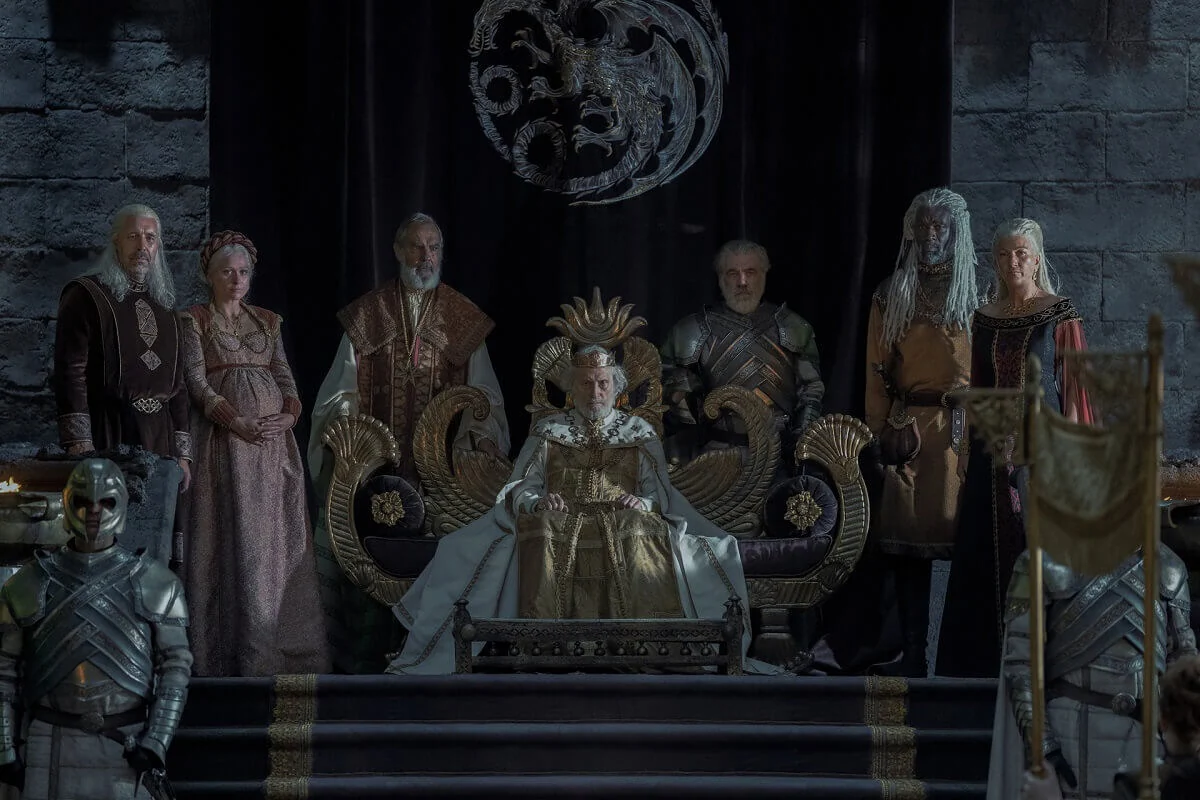
Viserys tells Rhaenyra that Aegon the Conqueror dreamed of a threat from the North and that a Targaryen must unite the realm against it. He presents the knowledge as a secret transmitted to an heir. The premiere establishes his belief and the act of transmission; it does not identify a complete timetable or demonstrate that every political choice made under the belief is correct.
Interpretation: secrecy turns knowledge into a credential
One possible reading is that receiving the secret makes Rhaenyra feel not only selected but necessary. The information becomes a sign of belonging to an inner line of authority. If accepted uncritically, that feeling could make a dynastic claim seem larger than an ordinary dispute about government.
The theory concerns the structure of belief, not a prediction of a particular future event. It asks what incentives arise when one family claims access to knowledge others cannot inspect. A warning meant to inspire responsibility can also make the holders less willing to submit their choices to ordinary scrutiny.
Counterargument: duty could restrain rather than inflate
The same inherited warning could encourage caution. Someone who believes a future danger requires unity might prioritize cooperation and the preservation of the realm over personal advantage. The existence of the secret therefore does not by itself tell us whether its political effect will be protective or self-serving.
That is the strongest counterargument to treating prophecy as automatically corrupting. A belief's consequences depend on how its holder acts when it conflicts with immediate desire. The premiere gives us the belief, not a finished record of those choices.
What would count as evidence?
To test the reading as you watch, ask whether the secret's holder uses it to accept a personal limit or to demand an exception. Does it make an opponent someone to persuade or someone whose resistance is inherently illegitimate? Those are observable differences, not claims to know the author's next move.
Nothing here depends on the endings of Game of Thrones or Fire & Blood. The open question is whether exceptional knowledge produces greater responsibility or an exemption from responsibility. Both possibilities are available from the premiere; this article does not certify either as the story's final answer.
Sources & reading notes
Checked September 5, 2026. Linked references support the episode facts or credited production comments; the analysis and discussion prompts are original. External pages, images, recommendations, and comments may reveal later episodes or book events.
Show external sources · spoiler caution
- Cover image source ↗Ollie Upton / HBO. Image copyright remains with its owner.
- Episode record · Wikipedia ↗Used to check episode events and credits; linked pages may include later-story material.
Filed safely through Season 1, Episode 1.