
Key takeaways
- Rhaenyra is the named heir at the end of the premiere.
- Rhaenys's exclusion establishes a precedent, not an uncontested written constitution.
- The succession ceremony resolves the immediate vacancy without resolving the gender conflict.
Episode facts are distinguished from our interpretations. This article follows television continuity and does not use future book outcomes to fill gaps.
The episode in focus
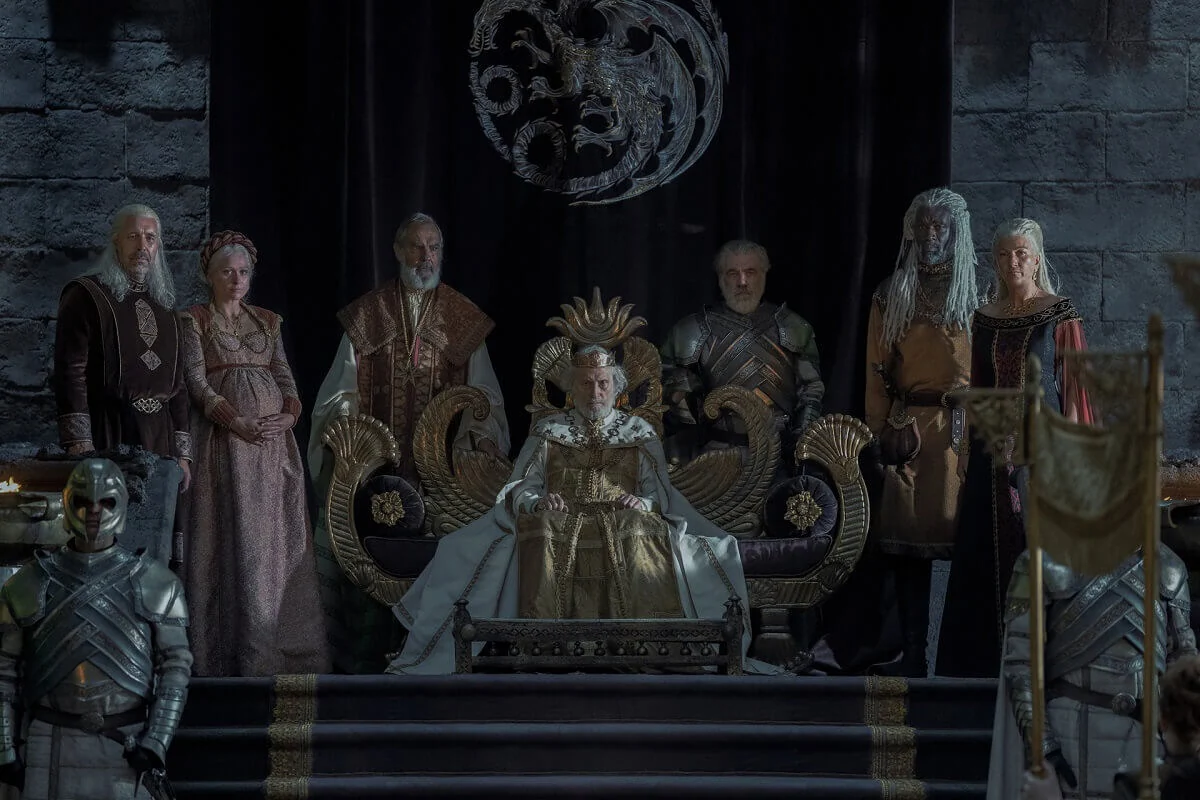
The Great Council chooses Viserys over Rhaenys. Years later, Aemma dies in childbirth and her newborn son Baelon also dies. After hearing of Daemon's reported insult about the infant, Viserys removes his brother from the succession and names Rhaenyra heir. The lords swear to her. Privately, the king passes on Aegon the Conqueror's dream of a northern threat.
An oath does not erase a precedent
The closing ceremony appears to answer the opening problem: everyone now knows who follows Viserys. Yet the two decisions rest on different authorities. The council favors a male claimant; Viserys asks those same political families to accept a female heir. Neither a neat family tree nor a count of relatives can resolve that disagreement.
Our reading is that the premiere distinguishes clarity from durability. A declaration can be clear today while remaining fragile tomorrow. Ask what makes an oath survive: the ruler's presence, the swearer's honor, or an arrangement that still serves the swearer's interests. This episode supplies the promise, not a guarantee.
Aemma is a person, not an empty branch
The tournament and the birth place celebrated public violence beside violence inside the royal household. Viserys is allowed to make the consequential decision about Aemma's body while the realm anticipates an heir. Read this as a critique of a system that prizes reproductive success over the person expected to provide it, not as a necessary price for dynastic stability.
Rhaenyra consequently receives both an opportunity and a warning. Being made politically important is not the same as being allowed control over one's life. A sympathetic father can still reproduce the assumptions that hurt his family.
A useful rewatch question
Compare who speaks in the council with who must listen. Rhaenyra is close to decisions without initially being their author; Alicent is sent into a private room to serve a plan she did not devise. That difference between proximity and power is a useful lens for the premiere. It does not require knowing where either young woman goes next.
The prophecy is something Viserys believes and transmits. At this boundary, it is not proof that any particular claimant will be a successful or ethical ruler. Keep belief, evidence, and political entitlement in separate columns.
Sources & reading notes
Checked September 5, 2026. Linked references support the episode facts or credited production comments; the analysis and discussion prompts are original. External pages, images, recommendations, and comments may reveal later episodes or book events.
Show external sources · spoiler caution
- Cover image source ↗Ollie Upton / HBO. Image copyright remains with its owner.
- Episode record · Wikipedia ↗Used to check episode events and credits; linked pages may include later-story material.
Filed safely through Season 1, Episode 1.